
A parent holding one plan for a child’s itch is deciding how a child’s days will go. This article asks what that plan assumes and how to check it.
What the plan says about baths and moisturizers
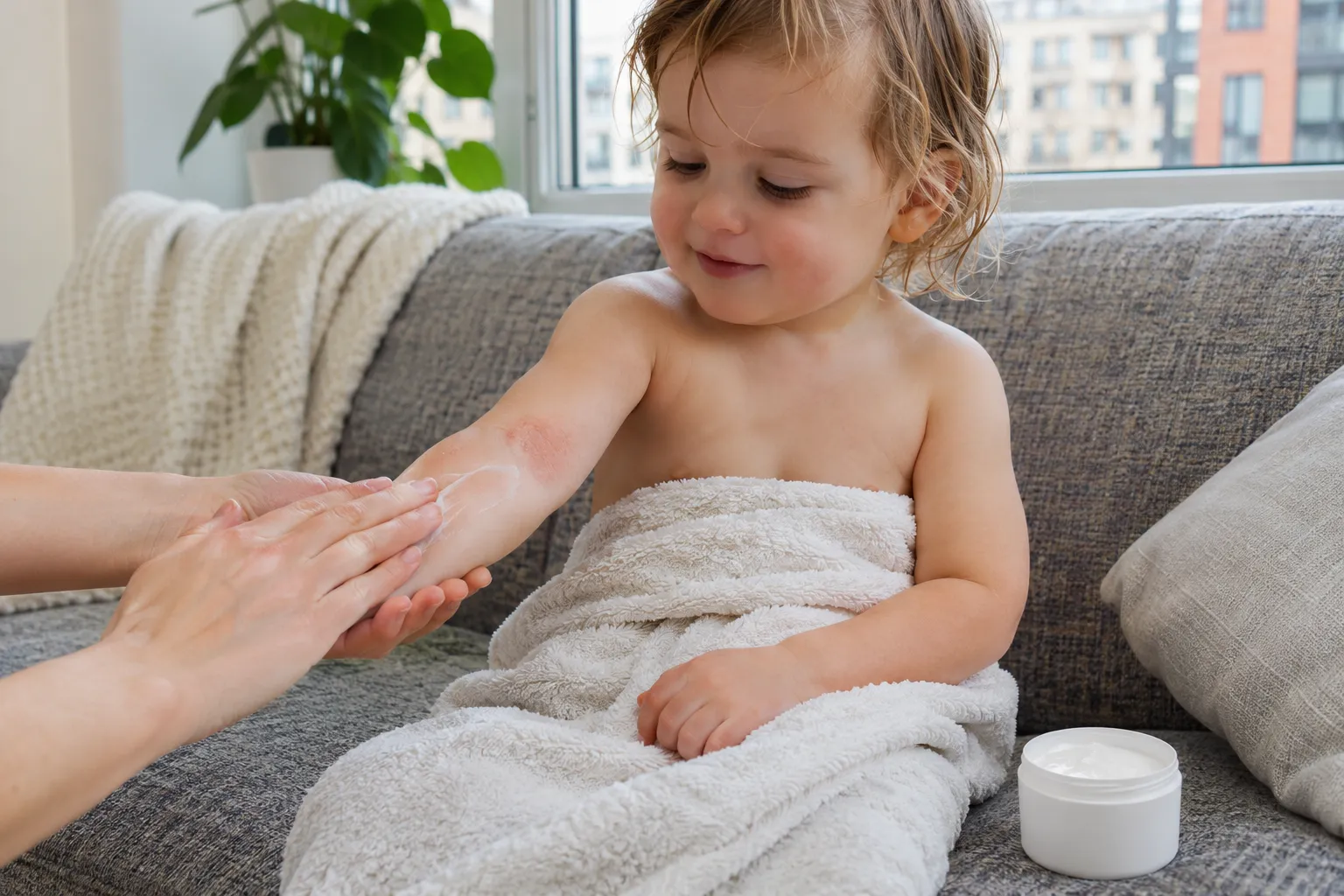
The American Academy of Dermatology’s page on itch relief and skin care for childhood eczema states: “Baths and moisturizers play an important role in treating eczema.” If a plan for your child mentions neither, ask why. If it mentions only those, ask what else was considered.
Two sources, two vantage points
The American Academy of Dermatology’s Eczema Resource Center is written for the general reader. The Nemours KidsHealth page on eczema is written for teens. Reading both tells you whether the plan was built for a young child or adapted from advice aimed at someone older.
The daily routine a plan takes for granted
A routine built around baths and moisturizers assumes a family can keep it up every day. A plan that adds more steps assumes the first steps were not enough. Both assumptions can be reasonable, and both deserve to be said out loud before the plan is accepted.
The Cleveland Clinic’s overview of eczema, its causes and types is a helpful third reference when you want to know which kind of eczema the plan is addressing.
How to tell whether the routine is helping
The test for a child's routine is how you will know, within a reasonable time, whether it is helping. A plan worth following tells you what to watch for, while a weaker plan only says to continue.
Marking what the plan adds or drops
Compare the plan against the line on baths and moisturizers and against the general reading above. Note any step the plan adds or drops, and bring each difference to your next conversation with the clinician. Parents in Madera County are as much the audience here as those in North Fresno, where the publication is based.